Tuesday, 23 January 2018

In Conversation With Harry Borden

The grandfather clock dispatches each tick with authority. At the top of each hour, its chimes reverberate in every corner of the extensive Devon farmhouse, bouncing off the framed Cecil Beaton and Tierney Gearon prints, pounding around the en-suite office that stores over 25,000 rolls of film in regimental black binders, skipping over the Sir Alex Ferguson-signed football shirt and ruffling the belly fur of resident golden retriever Sandy who’s lying on her back in the living room. The photographer stirring in the master bedroom is acutely aware of the fickle and finite ticking of time. His time has been successfully deployed during a 25-year career that has made him one of the go-to portrait photographers of a generation. It’s 7am and time for him to get up.

I slide out of the guest bed, which snappers Zed Nelson and his partner Maja Daniels slept in just a few nights before and join Harry Borden in the kitchen where he is slicing up home-baked bread for marmalade on toast #bakingborden. Dressed casually in an inside-out, made-in-Vietnam, blue-and-white-hooped Gap T-shirt, knackered dark shorts and Croc shoes, he arranges the breakfast condiments on the table as obsessively as he would construct one of his portraits.

As I sit sipping milky tea from a Charles and Diana wedding mug, listening to Borden’s rapid chatter, it’s clear that from the very beginning, Borden likes to win; not only win, but to out skill, out think, out manoeuvre, out earn and out photograph his competitors. He has won World Press Photo awards in 1997 and 1999 for portraits of entrepreneur Richard Branson and singer Björk respectively (a competition he has also judged twice), won the Naylor Prize for Photography for a portrait of a farmer at The National Open Art and has had work selected for the National Portrait Gallery’s annual photographic portrait prize, once for nine consecutive years in a row (in one of those years, three images were selected). The National Portrait Gallery holds more than 100 examples of his work in their photographic collection and there aren’t many magazines that have not yet published his work. Borden’s most satisfying victory is, arguably, over his Jewish-American father. When he declared aspirations to be a photographer, he was told that he didn’t have what it takes. His father had worked as an ad man on Madison Avenue in the 1960s (one of the genuine Mad Men) working with great photographers, so he knew, and advised his son to take a job in a camera shop instead.

Richard Branson ©Harry Borden

I first met Borden in the early noughties at the offices of the Independent Photographers Group (IPG) the agency which represented us both. Borden didn’t frequent The Fox pub next door with myself, Marcus Bleasdale and Tom Stoddart; the clammy hand of mortality wasn’t one Borden was eager to shake too early (when he does get to shake it, he’ll probably challenge it to a thumb war). IPG photographers had to write their jobs down in an annual log book. I often checked how the others were doing: Borden’s list always had the most pages (win). IPG photographers prints were stored on shelves along the wall; Borden’s shelf was by far the longest (win).

Borden hauls over a metal case and lifts the lid on how his career began in London, the city that he left aged six, moving from a posh preparatory school in Kensington to a free-school-dinners comprehensive school in Devon and a childhood dominated by shovelling pig shit on the family farm. Advertising photographer Lester Bookbinder, who was in Devon visiting his father, advised Borden to move to London. He did, arriving in 1989 with an Ordinary National Diploma portfolio from Plymouth College of Art and Design and experience garnered from a brief stint working at a photographic studio in Exeter. His father’s comments galvanised Borden with a fierce desire to succeed. It didn’t take long, securing his first (£25 all-in fee) commission for the NME, a portrait of the Smiths guitarist Craig Gannon, published on 18 March 1989. I know this date is correct as it’s on the laminated, felt-mounted, tear-sheet he hands me from the case. His first NME cover, of Primal Scream singer-songwriter, Bobby Gillespie, also laminated (and I must confess, now a little sticky with marmalade), soon followed.

Young Borden said yes to everything; he said a laminated yes to commissions for Truck magazine; Boardroom magazine and Recruitment Monitor magazine. Older Borden says yes to as many invitations he can to talk at schools, colleges and universities “sending into the world an army of admirers”. If Borden says no, it would open up an opportunity for another photographer to say yes. Borden has nailed his place in portraiture history and confesses a desire for more reportage assignments. The results he shows me from a shoot of actor Tom Hiddleston in Guinea for UNICEF won’t trouble the behemoths of photojournalism but, with a few more opportunities leveraged Borden’s way, they just might. His 288 page book on on Holocaust survivors will be published in Spring 2017 by Octopus and he is making progress with his Single Parent Dads project.


It’s time to pick up his young son, affectionately referred to as Bubba and his first child with his partner, the Panos Agency photographer, Abbie Trayler-Smith, (who is away on assignment in Zambia). Borden slides on a gold-plated pair of prescription Ray Bans, a present to himself in the early 90s while on assignment in the USA, strides past the trampoline dominating the west garden #bouncingborden and does what all proud parents do – enthuses how well their kid is doing and what amazing things they say. Arriving at Bubba’s carer’s garden gate, the junior Johnny Vegas look-a-like bundles over wearing two stickers on his correctly worn red and white hooped T-shirt. I ask what the stickers are for? “One for doing wee, one for doing poo.” Amazing. Climbing in the battered silver Fiat Punto with a missing petrol flap, we nestle among the discarded waterproof clothing, iPod headphones, empty petrol can, empty milk carton, shopping receipts, antacid tablets and a wrapped tampon and swerve on over to visit the oldest of his three children Polly, from his 14-year marriage to Jane, a consummation that also produced Fred, 15, and Oscar, 12. Pretty Polly has had an offer to study BSc (Hons) Psychology at the prestigious Goldsmiths College in London (win), providing she gets the A Level results she needs*. She’s has just got up. Borden shows her a snap on his phone of her and her exotically handsome boyfriend sleeping away another day. We ask if Polly can look after Bubba to allow us time to play a game of tennis, Polly asks if she can be paid for her time.


On a bike ride along the fish-riddled canal #bikingborden that runs east to west along the bottom of Borden’s south-facing garden, he describes meeting his first wife Jane, a free-spirited Gold Coast Australian and talented gymnast (win), in a Bethnal Green block of flats; of investing in his first flat in his early 20s and swiftly climbing the ladder to own several properties across London. As I cycle further away from the 7% proof Aspall Premier Cru Dry Suffolk Cyder I have chilling in his fridge and watch the bouncing head of Bubba in the seat behind Borden get further ahead, I try to think about his work than the stiffening of my calves and the thirst in my throat. I’ve four of Borden’s prints framed in my lounge: musicians Liam Gallagher, Jarvis Cocker, Pete Doherty and his classic shot of Michael Hutchence, dangling a cigarette delicately over a Parisian balcony. I’ve a copy of Borden’s Starwhite book by my bed; 30 portraits of actors, authors, comedians, artists, musicians, entrepreneurs, a singer and a chess player. The mainly square portraits vary from flash lit and daylight, close up and full length, colour and black & white, eyes open and eyes closed. The techniques may be different but they work as a style, a deceptively simple way of working that produces non-judgemental results. Borden admits to being quite forceful when shooting his portraits and advises aspiring photographers to “calm the f*** down and own the situation; there are no happy-accidents.” “This is great, isn’t it?” he suggests, slowing down to let me catch up “Make sure you cog down the gears before the steep narrow hill,” he advises (too late) and accelerates away to the top. I get off and push, a dozen middle-aged women about to begin their evening ride pause and witness my shame.


Borden has moved on from the technical tricks that helped make him a name: cross-processing colour reversal film, ring flash and Technical Pan film processed through Rodinal liquid developer (a technique that he claims to have invented) to a more understated style, and we move on to Waitrose (“Such a nice shopping experience”). Borden wanted to be like Brian Griffin (steak in the basket) and reveres photographers Diane Arbus, Irving Penn and Richard Avedon (tomatoes); he raves about comedian Stewart Lee (Gü cheesecake x 2) and the work of Alma Haser: “a true artist” (Australian Shiraz). Online photo-sharing social networking service Instagram, he believes, sorts those who can photograph, from those who can’t (dishwasher tablets).

Before we eat, it’s time for tennis. The court is located in the grounds of neighbours Kevin and Joan. Joan is at home and I observe this fruity, frolicking, sumptuous country lovely for perhaps a little longer than I should. Oof – new balls, please! There’s a virtuousness in how Borden allocates his time, where every second counts and an efficiency in the way he plays tennis, where every ball counts. I watch this confident, naturalised Brit dispatch a range of measured shots across the net. I’m outskilled, out-thought, out-manoeuvred and outplayed. Result: an emphatic Borden WIN.

*she did

A version of this article first appeared in the book - THE DENCH DOZEN: Great Britons of Photography Vol. 1


Sunday, 7 January 2018

In Conversation With Laura Pannack

Laura Pannack likes to walk. Disembarking the train from London Fenchurch Street at Southend Central, we walk west along Southend-on-Sea promenade and we walk east along Southend promenade. We walk through what Laura calls a “savagely disappointing residential area” and among savage looking bare-chested young men walking their dogs along Southend High Street. We walk past families in matching pink tops eating Jammie Dodger biscuits and dodge among myriad wheelchairs bearing their wheezy occupants. We walk to Southend Pier and we walk along Southend Pier; extending 1.34 miles (2.16 km) into the Thames Estuary, it is the longest pleasure pier in the world. It is also the most savagely disappointing pier in the world. You have to pay to step onto Southend Pier but can’t step onto it with your pet dog. There is no bandstand at the end of Southend Pier; no arcade at the end of Southend pier; no overpriced rides; no teenage girls being fingered, not even a head-through-the-hole amusing photo opportunity. You can, however, ‘adopt a plank’ on Southend Pier. We stop walking and board a train for the return 1.34 miles; there is no buffet bar on the train.


I had heard about Laura Pannack well before I first met Laura Pannack; they were tales of a ferociously determined young photographer. I first clapped eyes on Pannack at the 2011 Visa Pour l’Image International Festival of Photojournalism hosted annually in the town of Perpignan, France. A colleague I was sat with at the popular Café de la Poste flicked a finger over my shoulder flecking me with remnants of his croque monsieur: “Laura Pannack’s arrived, it’s officially a festival.” The hairs on my neck prickled to attention as I spun around. “Where!? Behind the sweet-petite-tousled haired brunette with neat eyebrows and glowing skin, wearing dark shorts, sunglasses, cute white cardigan and holding a black shoulder bag?” I inquired. “IT IS THE WOMAN IN THE WHITE CARDIGAN!!!” I swivelled around and retreated into my Aperol Spritz.


Laura Pannack likes to talk. To be fair, she asks better questions than I do but, to be fair, I’m too tired to talk after all the walking and I’m carrying half her kit on account of her arm being broken while roller-blading on her birthday. She talks of originally wanting to be a conflict photographer after watching the James Nachtwey film War Photographer on DVD. She talks of being elated after meeting famed photographer Eugene Richards in Amsterdam and deflated by another when they refused her access to shadow them on a photoshoot. She talks of getting her face painted as a tiger with her then-partner on her last visit to Southend. She talks of trauma and protecting herself from pain by surrounding herself with people she can trust. She talks of influential photographers Sally Mann, Esther Teichmann, Joakim Eskildsen, Gregory Crewsdon, Man Ray and her mentor Simon Roberts.

She talks about her South African-born father, the photographer Paul Pannack, (also a keen rock climber and martial arts enthusiast), who counted Duffy among his friends and shared a darkroom with David Bailey. The young Pannack used to enthusiastically tip trays in her father’s darkroom at the bottom of the garden and spent many adventurous weekends hanging out with him in eclectic studios. Pannack was seven years old when her father split with her Jewish mother. Born in Surrey–  “an isolated bubble of nothingness” – Pannack attended Tolworth Girls’ School where the often cruel playground environment stiffened her resolve to succeed. Like many young families, family Pannack occasionally struggled and struggled through; if payday was still a few days away, she would be served ‘mother’s surprise’ to eat, a boiled egg wrapped in minced meat with a side serving of an “amazing tomato sauce.” When there was no mother’s surprise, she was taken with her younger sister to munch on corn cobs at Garson farm, falling sick after one visit when she ate a whole cucumber and on another, after consuming too many gooseberries. 

Dench photographed on Southend Pier by Pannack using Polaroid.

Laura Pannack likes to take pictures. As we probe the streets of Southend, Pannack drops from my vision with the efficiency of Fenella Fellorick the Kettle Witch, popping up amongst the mobility scooters that crisscross this seaside Wheelie World, returning with a subject for her lens. She coaxes over red-haired Alex to be photographed – she’s wearing a red hooded top – and asks me to step in and face Alex: “Closer.” Alex smells Body Shop-scrubbed (I think it’s dewberry juice). “Closer.” Alex is listening to energetic youth music on her iPod. “Closer.” Alex has a pimple on her left ear, CLICK! Two Justin Bieber look-a-likes (Beliebers?) look on with amusement. Being photographed by Pannack I feel vulnerable, alone, manipulated yet strangely compliant. Alex calmly departs without seeking an explanation of what has just transpired or receiving one although generally Pannack likes to chat with her subjects and thinks it selfish not to. On Southend seafront, Pannack pings taut and moves towards another red-haired girl (perhaps she is hoping to nail her next Taylor Wessing Photographic Portrait Prize submission). Grace is a soft skinned, plump, sulky-looking teenager wearing a light pink playsuit and clutching a mobile phone. I don’t know what Pannack says when approaching her but I’m sure it’s said in a way that only Pannack can say it; the pink play-suited teenager, hoping to study for a BTECH National Diploma in Science, playfully swings her left foot as the Kodak Portra 160 reels steadily forward through Pannack’s Hasselblad.


We pause for more talk over lunch at the Waterfront Cafe that has no view of the water; Pannack winkingly manoeuvres the salt shaker in front of me and suggests a portrait. She can’t remember the last time she took a picture she liked but her pictures have been liked enough to take her far. She has shot for the Guardian, Sunday Times and Telegraph magazines among many others; won and been shortlisted for several awards including The Sony World Photography Awards, The Magenta foundation and Lucies IPA. She was recently awarded the Vic Odden by The Royal Photographic Society for ‘a notable achievement in the art of photography by a British photographer aged 35 or under’; she has many years left to be notable again. In 2009, Pannack received first prize in the Portrait Singles category of the World Press Photo awards for a portrait of recovering anorexic, Graham. Graham was photographed using natural light against a light blue wall in his bedroom, the winning shutter-shot deployed during a shared moment of silence as Graham reflected on his illness. It’s this shared emotion of silence that is key to Pannack’s most successful photographs and projects (that or the deployment of a salt shaker in many of her photographs, overridingly though, I think it’s the shared emotion of silence). Young British Naturists, Young Love, The Walks… all of these projects are deafeningly silent but have taken a lot of chatter to achieve. Her current project on a tight-knit community is around three years in the making, averaging just over one picture a year. Pannack is undeterred, a firm believer that “time, trust and understanding is the key to portraying subjects truthfully.”


Waiting for the return train home, I crack open a can of Strongbow cider, Pannack swigs back from a bottle of Pinot Grigio, peels open the pack of nude playing cards purchased from a Southend joke shop and gently asks: “What have you learnt about me today, Dench?” I know what this is, this is one of those shared moments of silence, of reflection, of emotion. I think about the powerful photograph she took of Shay smoking a cigarette from a car window on a day out with the teenager. “WHAT HAVE YOU LEARNT ABOUT ME TODAY, DENCH!” Oh! It wasn’t a shared moment of silence and reflection. I’ve learnt that I prefer it when Pannack smiles and those smiles have to be earned. Arriving back among the city suits drinking pints of Peroni in low-level Fenchurch Street sunshine, we say goodbye, I hesitate at Tower Hill underground train station, pull out my own camera and pull on tight my rucksack and decide, that today, it’s better to walk.

A version of this article first appeared in the book - THE DENCH DOZEN: Great Britons of Photography Vol. 1


Friday, 29 December 2017

A1: BRITAIN on the Verge

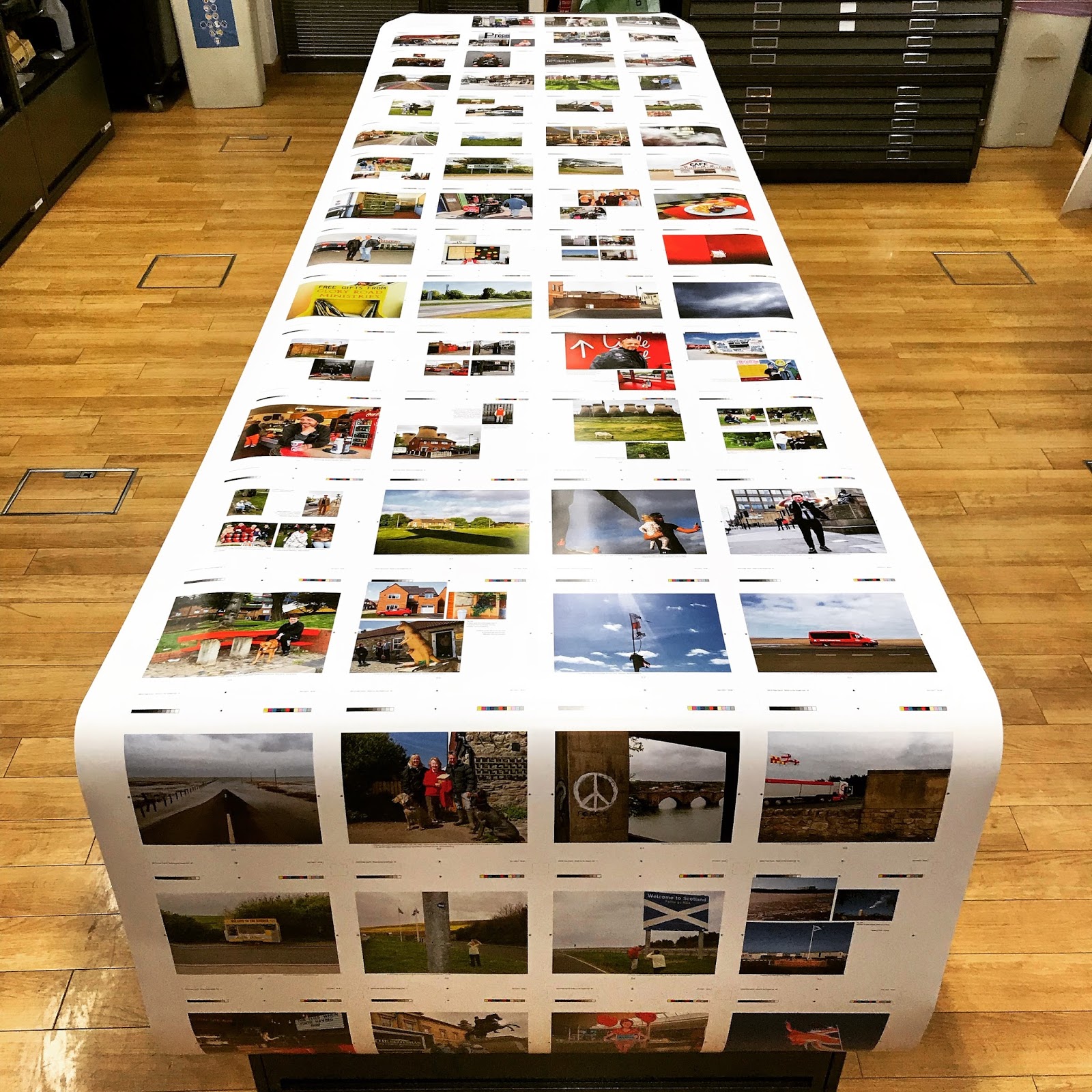
In the early 1980s, English photographer Paul Graham, documented the life and landscape of the A1. 25 years later, I made the  photographic journey along Britain’s longest road.
 
Babs sat under the menu board in BABS cafe where she has worked with her husband Pendleton for "27 long years". Blyth, Nottinghamshire ©Peter Dench

Britain is about to change. The faultlines that exist across the country have been exacerbated by the nation’s 2016 decision to leave the EU and the unconvincing outcome of the June 2017 general election. Communities and families have been divided. Is life in Britain about to become better or worse? Will employment opportunities increase or diminish? Will the economy and industries collapse or thrive? Are the British worried about the future and do elderly people, the majority of whom voted Leave, care less about it than the young? Will Britain leaving the European Union mean immigrants will feel unsafe and be forced to leave? How proud do people feel to be British?

Challis Cooper (20) and Arnold (22) take a break at Baldock Extra Motorway Services, on their way to visit family in Great Yarmouth. Radwell, Baldock, Bedfordshire ©Peter Dench

These are some of the many questions I wanted to put to the people of Britain. The A1, Britain’s longest numbered road, was my tendril to them, an artery that connects as much as it divides. It begins near St Paul’s in the City of London, zipping north through the suburbs of Bedfordshire, the industrial East Midlands, north east England and the east coast of Scotland, ending around 410 miles later in Edinburgh. I travelled it’s length photographing the eclectic characters I met along the way; in truck stops and cafes, temples and homes, businesses and bars. It provided me with a route of certainty in a time of tumult, through a nation on the verge. 

56 year old Sikh, Vaz, hoses down the entrance of Sri Guru Kalgidhar Gurdwara before worshippers arrive on a Sunday. Doncaster, South Yorkshire ©Peter Dench

Houses situated in close proximity to the cooling towers at Ferrybridge Power Stations. Knottingley, West Yorkshire ©Peter Dench

After a break at an OK DINER, Vilma and Darius are continuing on by car to Sheffield. Both Lithuanian, they have lived in Britain for over a decade and aren’t concerned about their residency after the UK voted out in the European Union membership referendum. Newark, Nottinghamshire ©Peter Dench

A selection of the reportage will be exhibited at the Art Bermondsey Project Space in London and YOU are invited


The first 500 visitors to the private view and exhibition will be able to collect a complimentary 71 page softback book


Featured on the BBC


Paul Graham's A1

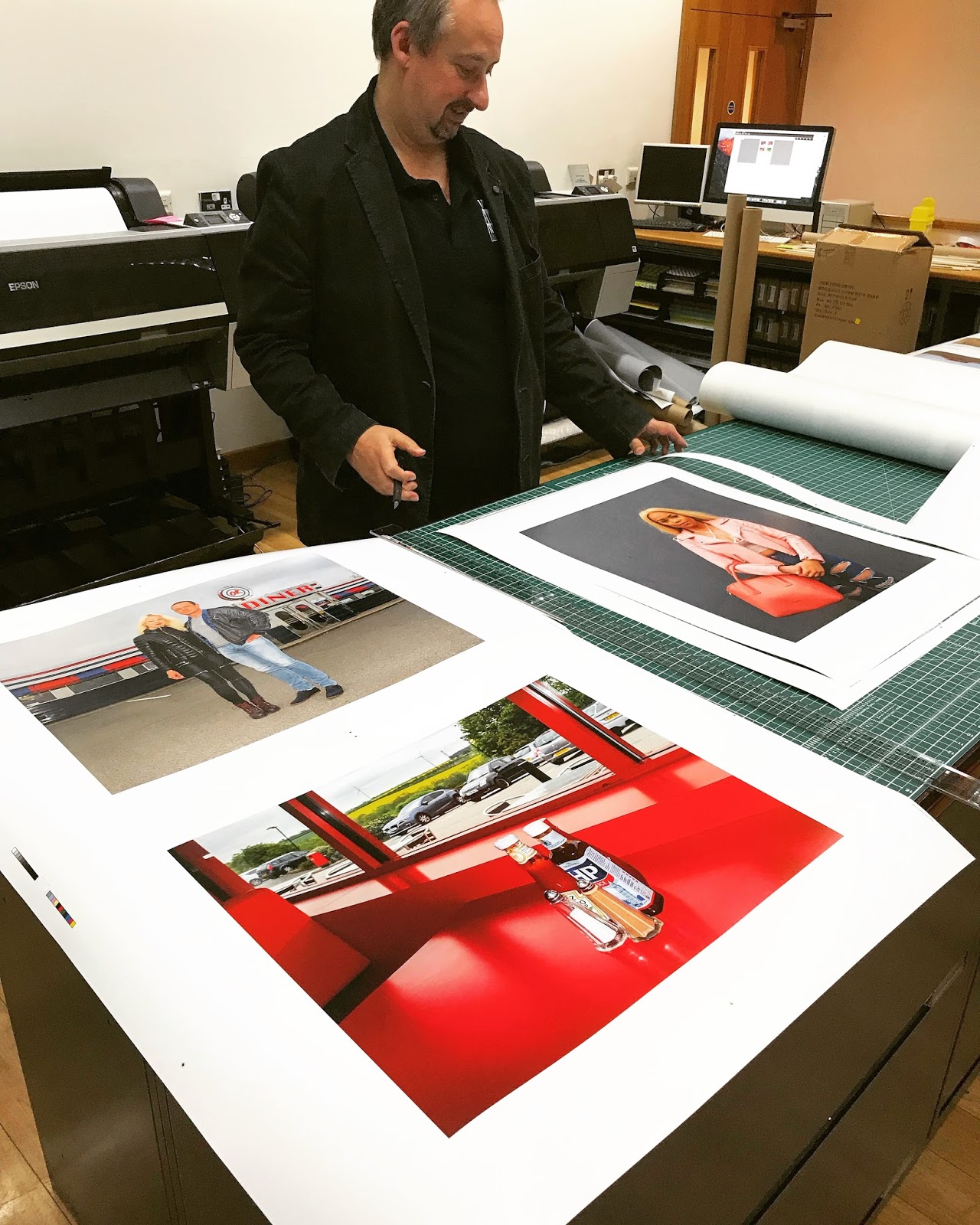
A1: Britain on the Verge prints


Saturday, 28 January 2017

Great Britons of Photography the Exhibition London UK


 DENCH's GREAT BRITONS OF PHOTOGRAPHY
AN EXHIBITION CURATED BY  PETER DENCH
 14 - 25 FEBRUARY 2017

"Being a photographer can be a solitary and selfish pursuit, often necessarily so. You compete, aim to be the best and plot your romp towards the next triumph: for years OLYMPUS Visionary, Peter Dench operated like this.

With the domination of digital photography and no longer socialising at the film processing lab, combined with the newfound comfort in his forties and with his craft, Dench actively began to meet other British photographers, to take an interest in what they have done and the way in which they did it.

DENCH’s Great Britons of Photography, brings together the work of some of the greatest living British photographers including: Jocelyn Bain Hogg, Marcus Bleasdale, Harry Borden, John Bulmer, Chris Floyd, Brian Griffin, Laura Pannack, Tom Stoddart, Homer Sykes, Anastasia Taylor-Lind and Peter Dench (naturally).

All of the photographers featured in this intimate and revealing exhibition have shaped Dench in some way; sometimes professionally, more often, personally. They are glimpses into the lives and practice of some of British photography’s most extraordinary characters."


Art Bermondsey Project Space is a professionally run, not-for-profit independent gallery sponsored by Olympus - as part of their Cultural Initiative Programme -  in association with State Magazine. The gallery provides a platform for fresh ideas in the visual arts and embraces artists from all cultures. Three galleries, three floors, three thousand square feet of this former 19th century paper manufacturer - including a dedicated video-screening suite - have created one of London's most dynamic non-profit art spaces. 


An accompanying book featuring twelve photographers is published by Hungry Eye; delivered as a limited first edition of 500, a high quality, case bound coffee table book with gold foil detail.

“This new collection of interviews and photographs by Dench is hilarious and insightful, always engaging and written with an inimitable wit and style; an instant classic.”  Tom Knox, Thriller Writer

The book will be available for purchase during the exhibition and at the launch on the 15th February to which you're invited. Some of the photographers featured in the book will be present on the night and might even sign their page! If you can't make it along, don't worry, the book is available to buy online here available for shipping worldwide.


Friday, 11 November 2016

THE DENCH DOZEN: Great Britons of Photography Vol 1


Great Britons of Photography Vol 1
THE DENCH DOZEN


"Dench has done it. This new collection of intimate, acute and heroically revealing insights into the lives and work of some of British photography’s most colourful characters, is an instant classic; often hilarious, sometimes crazy, always engaging. Welcome to this unique collaboration with the team behind the imaging Journal, Hungry Eye."

The content within this brand new book is the result of years of personal encounters between Peter Dench and his choice of photographers. In conversation pieces that serve as a celebration of British photography and give a unique insight into the lives and professional practices of this impressive list of subjects.
 

Delivered as a limited first edition, high quality, case bound coffee table book with gold foil detail, in association with Leica UK and 500 only.

 Great Britons of Photography Vol.1: THE DENCH DOZEN includes
 
Jocelyn Bain Hogg
Marcus Bleasdale
Harry Borden
John Bulmer
Chris Floyd
Brian Griffin
Laura Pannack
Martin Parr
Tom Stoddart
Homer Sykes
Anastasia Taylor-Lind
Peter Dench [naturally]

Dench said: “All of the photographers featured have shaped me in some way; sometimes professionally, more often, personally. I view each piece as a collaboration, a written account of our time together, a glimpse into the lives and practices of extraordinary photographers, all of course, with a healthy dose of Dench.”
Simon Skinner, Editor Hungry Eye said: “This inaugural book demonstrates the direction in which the Hungry Eye brand is evolving. Five years in and seeing the continuing growth of our quarterly Journal, way beyond our expectations, we are developing a series of books to compliment this initial collaboration with our longest serving contributor”. 

Thriller writer Tom Knox said: “This new collection of interviews and photographs by Dench is hilarious and insightful, always engaging and written with an inimitable wit and style; an instant classic.”


Great Britons of Photography Vol.1: The Dench Dozen 
ISBN: 978-0-9926405-2-1
160 pages: [inner]
Over 80 full colour and black & white photographs
Limited Edition: 500 copies of the first edition £50
Available to order here (ships worldwide) and available from additional selected outlets from November 18th 2016
Produced in association with Leica UK 
 

Chris Floyd

Harry Borden
 

Saturday, 7 May 2016

ROKAS

Fashion photographer Rokas Darulis crunches his 6ft 5inch, 93KG frame into a solid crouch, crams the Canon MKIII firmly to his eye under his black Criminal Damage snapback cap, depresses the shutter and releases a rapid rattle of frames through a 50mmm lens. “Perfect, really good, just keep moving like that” is the quiet but firm advice he delivers to 25 year old Belgium born model, Yannick Abrath, as he fluidly moves in front of Darulis’s lens, moves  Abrath has honed over a six-year career working in the industry. Darulis, who wouldn’t look out of place on the pages of a fashion magazine himself, shoots fast: no gimmicks no assistant, no fuss. He has to shoot fast, this street that runs parallel to London’s Waterloo Bridge is busy; a mixed-race family with orange balloons from the Giraffe restaurant chain tied to a pushchair bobble on past. Duck Tour amphibious trucks grumble menacingly close to Darulis’s Tamrac bag plopped by the side of the pavement and a blonde-haired dwarf in a green dress wobbles quickly towards the Hayward Gallery.
 

I graduated from the University of Derby in 1995 with a first class honours degree in photography and moved swiftly to London; two years on the dole followed, sponging off my parents and scratching around for extra images to bolster my portfolio. Fourteen years later, Lithuanian born Darulis, graduated from Middlesex University with a first-class honours degree in photography; in his first year out of university working as a professional, commissions for magazines Pravda (in Lithuania), Monika and Tank were completed. He shot for commercial client Svyturys Beer and seven days a week for the British online fashion and beauty store ASOS. He was asked to shoot tests for Elite model management agency, a request that could have become a formulaic, factory produced series of images. They are not. Darulis’s Portraits of Girls in my Studio (the studio being a small corner of his rented apartment) are exquisite, each shot crafted with the aspirational professionalism of Irving Penn, the skill of Richard Avedon, the eye of Peter Lindbergh and the mood of Paolo Roversi. Elite were impressed enough to start paying him £30 per model, then £70 per model, then £175 per model.

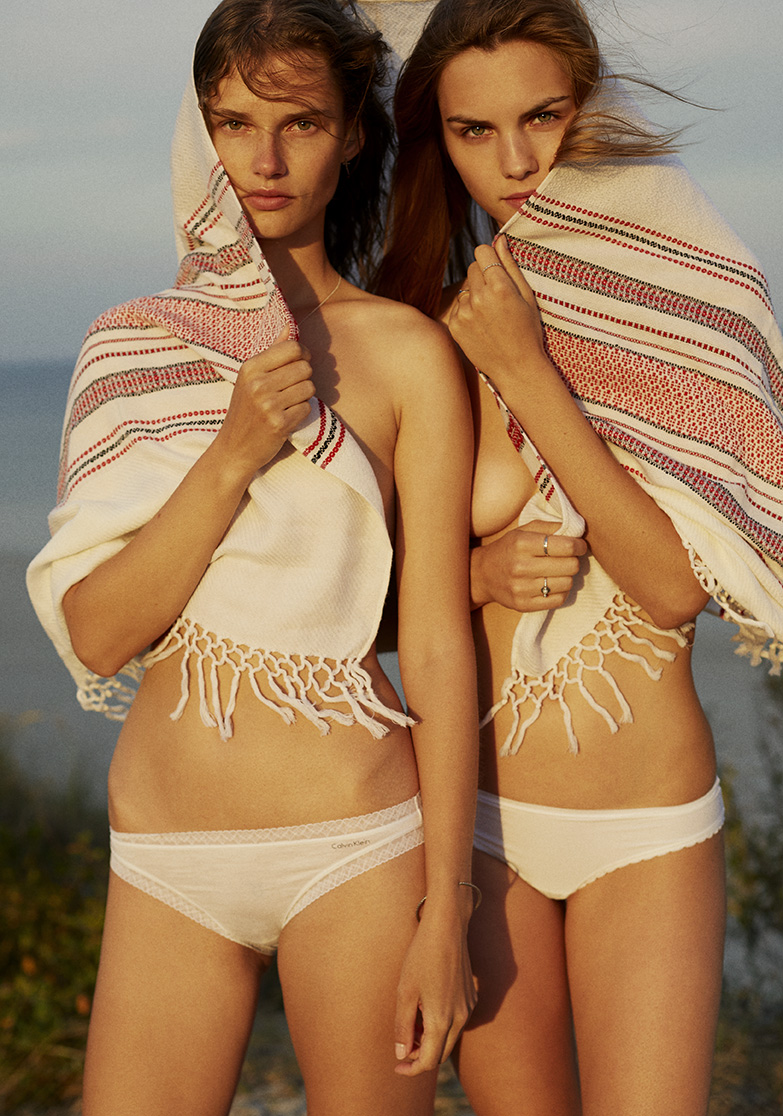
It’s the Portraits of Girls in my Studio and his Seaside Stories images that convinced me, in 2012, to curate and commission his first UK solo show at White Cloth Gallery. The exhibition remains one of the most fondly remembered and talked about by those who caressed their eyes across it. 6ft prints of chisel-chinned men crying, towered down on dark, moody prints of sultry men sucking back cigarette smoke. Square formatted chaps with sculpted moustaches bristled alongside semi-naked young women folded into fur coats or stretched out across crisp cotton bed sheets wearing sheer white panties.


If you can take such spontaneously delicious shots at the seaside of your friends there has to be potential. It helps if your friends are spontaneously delicious and your girlfriend is the Lithuanian born model, Julija Steponaviciute aka Step. Represented by Storm model management (their website reliably informs) Step has a height of 5’ 10.5” (179.07cm), has green eyes, light brown hair, 32” bust, 34.5” (87.63) hips, 24” (60.96cm) waist, dress size UK 8 and wears a UK 6 shoe. She has modelled for Italian GLAMOUR, Elle France, Fashion Gone Rogue magazine and Damernas Vald Sweden among others. Darulis and Step have been together over four years and she has been successful enough in those years, to buy outright, a 98 square metre apartment in the Lithuanian capital, Vilnuis.

©Rokas Darulis

Darulis was born in the small town of Siauliai, the cyclops eye of Lithuania. He was four years old when his country officially gained independence from the Communist Soviet Union. This afforded him the opportunity to put down his wooden toys and pick up exotic imported fruits rich in colour and flavour, that the iron curtain had denied him. “Exotic fruits such as…?” I ask him. “The banana!” he exclaims triumphantly pointing into the air. In search of more exotic fruit, or perhaps, more likely, in search of better paid work across the free world, his diplomat parents took him to Dublin and Chicago before he was sent back to live on his grandparents' farm. On his arrival, his grandfather gave him an old Soviet KIEV 35mmm camera to play around with and Darulis was on his way. When recently giving a talk about his career to date, at the Lithuanian equivalent of London’s Excel centre, 800 people turned up to hear him. That probably makes him one of Lithuania’s most famous sons alongside Zydrunas Savickas (below), who has won the country’s Strongest Man competition a record 12 times.


Balanced precariously close to the edge on the third floor balcony at the National Theatre, Darulis completes another of the required ten shots for the Korean edition of Arena Homme+ magazine and retires to take a breather and a gulp of his aloe vera mango juice. Even sat down in the boot of the silver/grey Volkswagen Transporter van he dominates: a Godzilla in the East Asian team. As the Alexander McQueen, Paul Smith, Dior and Pringle designer clothes chime in the breeze dangling from coat hangers around Darulis head, he flips the lid on his Mac laptop, rams a 16GB Extreme III CompactFlash card into the card reader and reviews the morning's work. The previews are beautiful and crisp, honest and enjoyable, black & white. Darulis doesn’t trust the in-camera colours. Satisfied, he springs up onto his Nike Air Max clad feet, tucks his key chain into his long black skinny jeans, neatens his white T-shirt and bounds towards the next shoot scenario.

©Rokas Darulis

A few days later, I catch up with him on the trim terrace of an Italian eatery in north London. In April 2014, he packed up his bags and left expensive London to return to live in Lithuania. Arriving back in Lithuania, he had a call inviting him to join the east London based, Saint Luke Artist Management Agency (three years after he first approached them about representation). With no need to pack his bags, he just turned back around and retraced his journey. The Saint Luke Agency, represents photographers Nik Hartley, Dima Hohlov, Alexandra Leese and Rahel Weiss; they could have their pick of more established photographers, but picked Darulis.


Since he's been on the books at Saint Luke, Darulis has been busy. Very busy. He has three to four meetings a day when he’s not shooting and has shot on assignment in Shanghai and Tokyo. His diary may be full but that isn’t necessarily reflected in his bank account. The only person that seemed to be on a salary from the Korean Arena Homme+ shoot was the van driver Dave. Darulis explains that most young fashion photographs aren’t paid for editorial assignments as most magazines are culpable of not offering a fee, Dazed & Confused and Wanderlust among them. He knows he has come far since graduating from Middlesex University but appreciates he has a long way to go. He thinks it could take another 20-30 years to achieve what photographic legends Mario Testino, Juergen Teller and Steven Meisel have achieved and then one of them would have to stop working, or die, before an opportunity to shoot for the world’s most sought-after clients would be ‘up for grabs’.

A month into a Masters Degree Darulis quit, keen to get to work,. He says that, in retrospect, would have quit a month into his undergraduate degree too, to get to work assisting, which he thinks is “the best education”. There is no plan B for this alpha male (except perhaps, playing poker) with his swimmers frame, basketball player's height, FBI Agent cool and photographic talent but with “patience, luck, working hard and being involved in everything you can” Darulis believes he will succeed, and I for one, believe him.

A version of this feature first appeared in issue 118 of Professional Photo magazine UK

Friday, 9 October 2015

DENCH DOES DALLAS : The Book


  • Paperback: 176 pages
  • Publisher: The Bluecoat Press (19 Oct. 2015)
  • Available to order HERE

©Peter Dench/Getty Images Reportage

 “In the summer 2015, award winning photojournalist, Peter Dench, was unleashed to photograph the iconic city of Dallas, Texas. Dench’s journey took him across the vast urban landscape capturing the colour and characters he met along the way. His forensic eye reveals a place far removed from the fantasies of film and television, a contrasting metroplex of baseball caps and cowboy hats, horsepower and horses. DENCH DOES DALLAS, the book and exhibition, is a saturated slap about the senses, a sideways glance at a fully loaded, remarkable American territory.”


 ©Peter Dench/Getty Images Reportage