Sunday, 14 October 2018

In Conversation With Anastasia Taylor-Lind

“Should I squirt before I wipe?” It’s a fair question. I’m in a white panel van racing across northern France to the Photoreporter festival in St Brieuc, northwest France. The journey was estimated at seven to eight hours; the journey would eventually take fifteen and a half. The driver hasn’t used the Garmin sat nav before, or any kind of sat nav before. The driver hasn’t driven for a while, or owned a car for five years. The driver is VII agency photographer, Anastasia Taylor Lind (ATL).

We meet at 6.45am as the mist lifts over Brixton where fishmongers slap their cod stock over ice on Atlantic Road and overhead trains thrust tired commuters towards their shirt-and-tie-required jobs. The van (yet to be named but ATL is sure it’s a women) was purchased for £5,000, with extra costs such as insurance taking the total to nearer £7,000. It will transport her the 8,000 or so miles she expects to drive across eastern Europe for the first part of her new project, Negative Zero, about fertility rates and population decline in Europe. Before she heads east, we continue west; fifteen and a half hours west.


ATL talks about photography a lot but knows it’s now time for her to take some more photographs, she needs to take them. Her last significant project, Siberian Super Models, was a few years ago; a self-initiated reportage (part funded by the Telegraph and GEO magazine) still ended up costing ATL around €8,000 as she was obliged to travel first class along with the international model scouts scouring the route of the Trans Siberian railway for the next face worth 35728000 Rubles. Siberian Super Models was published worldwide and received critical success achieving first prize in the Feature Picture Story Freelance/Agency category at the Pictures of the Year International awards and a finalist in Arts and Culture category at the Sony WPO awards. The reportage adheres to ATL’s interest in documenting the lives of women who live isolated from male society; an interest that has seen ATL document Women of the PKK (Kurdistan Workers Party) Guerrillas and Women of the Cossack Resurgence, a reportage where she got to frequently indulge in her love of horse riding. 

©Anastasia Taylor-Lind

I first witnessed ATL giving a presentation about the Cossack women for the Royal Photographic Society in 2010 and immediately assumed this horse-appreciating, double-barrelled delight was posh; it was a chippy assumption I often make about someone who is a success. ATL isn’t posh, in fact she only had one name for the first 18 years of her life, her unconventional family of travelling stock eschewed convention and gave their newborn girl just one name, a surname, Anastasia; she can be forgiven for making up time by now having three names.

En route to the Eurotunnel crossing at Folkestone, we pull in for some stomach fuel. Jade, who has four stars on her badge, is our designated McServer. The bacon is missing from my muffin and a coke is served instead of a coffee; that’s four-star service for you. We grumble past Jade, head back towards the van and observe a Romanian family boiling pans of water on the roof of their current hatchback home. It looks quite luxurious in comparison to ATL’s own upbringing, which was delivered without electricity, running water and mostly spent with her parents clip-clopping by horse and cart across southwest England looking for odd-job opportunities.

Driving onto the brightly painted train that will take us under the Channel, we’re reminded too late not to leave our pets at home alone. ATL manoeuvres the van into position and we jump out of the front and into the back, resisting the temptation to close the curtains and rock the van from side to side to provoke the stoic middle-aged, middle-class couple sat in the vehicle behind peering at maps over half-moon spectacles.

The back of the 2006 Peugeot van has one coat hanger and an electric blanket-smothered bed; there are enough baby wipes and photographic film to service ATL until Christmas. There’s Heinz tomato ketchup and Heinz baked beans; Earl Grey tea and dry cartons of noodles; a fluffy rug and six books including Painted Bird (Kosinki, Jerzy); HHHH (Laurent Binet); one on fertility decline and, I’m delighted to report, a copy of the collected Dench Diaries (Peter Dench). As we ejaculate from the tunnel to the tunes of Johnny Cash, ATL fidgets her Lee jeans into a comfy position, raises her neat, dark, slightly wonky eyebrows, fixes her Swedish-inspired blue eyes on the road and her Negative Zero European adventure begins, sort of; the sat nav initially blinks the location of Croydon Ikea before adjusting to a foreign field.
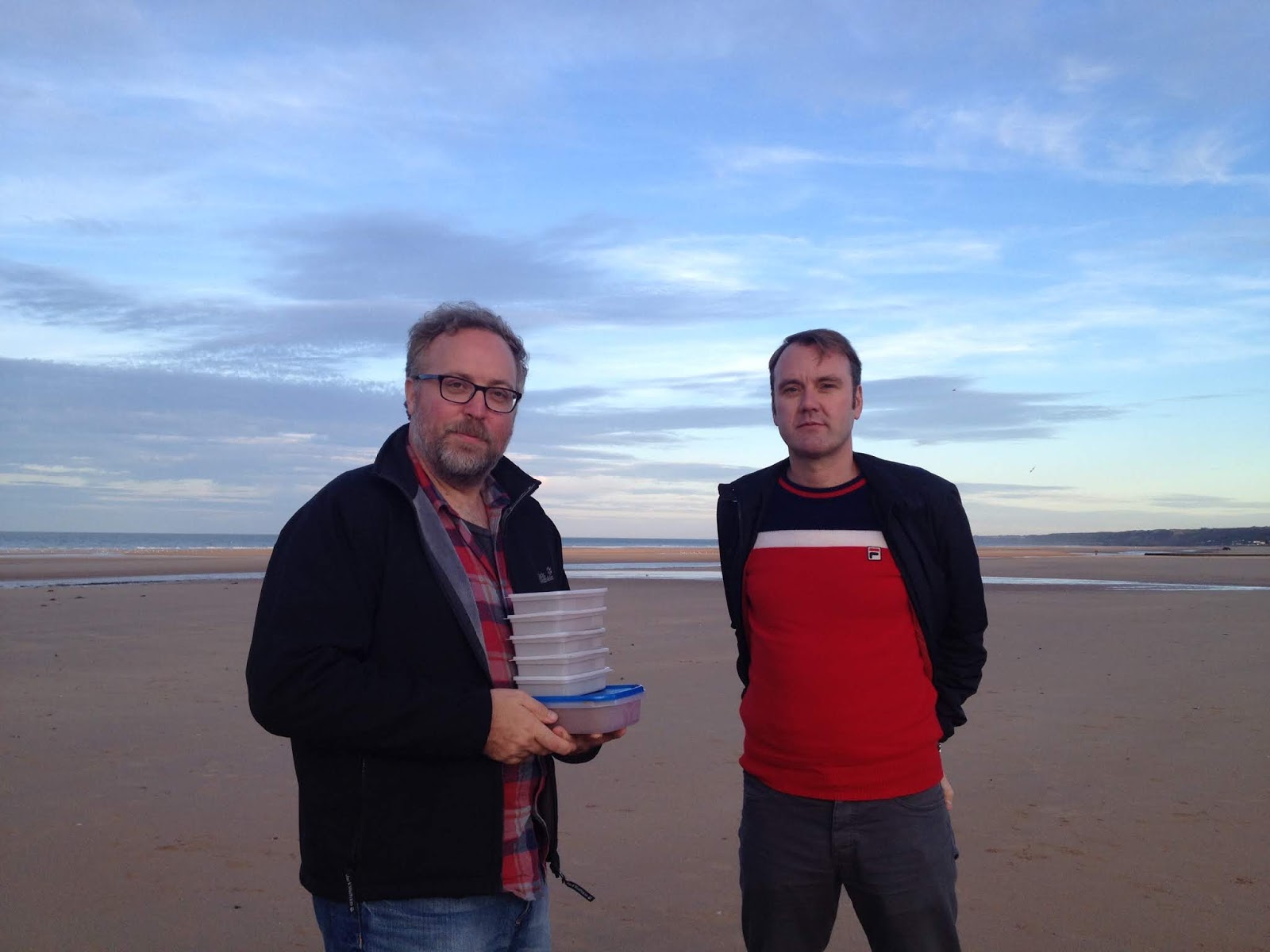

Munching a sour Starburst sweet, ATL explains her experience of hostile environment training and ways to extract yourself from the van if we plummet from the bridge we are driving across; I diligently write this down and am now afraid of bridges. Joining us in the van on our Commonwealth Expeditionary Force across France is VII agency snapper, Donald Weber. His exhibition War Sand, about the D-Day landing beaches, is being exhibited at the Photoreporter festival; between his frequent naps, we’re entertained by Don’s D-Day trivia. Arriving at the Photoreporter festival, ATL parks the van and points the bonnet eastwards in preparation of her odyssey. “Should I squirt before I wipe?” The vans windscreen jet wash is so feeble it doesn’t matter but I suggest, that yes, she should.

Back in the cosy confines of my London flat, I watch ATL plot her Negative Zero route online and follow with enthusiasm the posts of her editing contact sheets in London and Bangkok. Square-format film photography defines ATL’s practice, from depressing the shutter to editing the contact sheets with a coffee in the kitchen. It’s an approach she refused to deviate from when money was tight and when National Geographic magazine expressed an interest in her work but not in the square format for their preferred, double page spreads. Eventually, Nat Geo came around to the square and commissioned ATL to shoot a two month long, 200 rolls of film feature along the Yangtze river in China. 


On 21 November 2013: the cabinet of the then Ukrainian president Viktor Yanukovych abandons an agreement on closer trade ties with the European Union, instead seeking closer co-operation with Russia. Small protests escalate dramatically into 2014. Ukraine has the lowest life expectancy for men in Europe and is a crucial destination for ATL and her Negative Zero project. She arrives in Kiev, a city in chaos, and struggles to find a way to photograph among so many other photographers. She eventually decides on a unique approach: to assemble a pop-up street portrait studio with a black backdrop to photograph the photographers covering the conflict, then the rebel fighters, who the photographers increasingly come to resemble through their dress. After witnessing the bloodiest day of violence on the 20 February 2014, ATL begins to photograph the female mourners who arrive in their thousands, portraits that are more affecting than any from the frontline. Zhanna and Oksana carry red roses; Olia, Galina and Lolita red carnations; Katerina holds white tulips; Hanna cradles red tulips and Valentina holds a box of bread. The women’s eyes are defiantly moist, picked out by a golden reflector bouncing light into the darkness, the tears are matched by ATL’s own.


ATL is constantly in transit and travels so she can do what she enjoys most about travel, coming home. Arriving home from Ukraine, she was offered the opportunity to publish her portraits made in Kiev as a book; five months later, Maidan - Portraits From The Black Square is published by GOST. I’m first in the queue at the Frontline Club in west London to purchase a signed copy. ATL’s sun-streaked hair is tied up loosely in a bun. I request the thicker of her signature pens, a signature that is surprisingly neat for someone home schooled until nine years old. If ATL hadn’t found a book by Don McCullin while studying for her A Levels, I may not have this book in my hands. Over wine, we remember our trip across northern France and I ask about the van. ATL has had to sell it to fund the Maidan book project. Fixers, translators, film, food, accommodation have all taken their toll and driven her bank account down to a derisory negative zero.


Thursday, 22 February 2018

ONE TO ONE LONDON STREET PHOTOGRAPHY WORKSHOP

Hello! I’m photographer Peter Dench and I’d like to offer you the opportunity for a one to one, one day workshop.


Join me photographing at some of my favourite central London locations looking to capture the humour and irony in English society.


The route will take in the grandest tourist spots London has to offer: Oxford Street - Piccadilly Circus - Leicester Square - Covent Garden - Trafalgar Square - Westminster & Whitehall.


The day will include a pub lunch, probably involving a pork pie, pint, crisps and a large pickled onion.


A signed copy of England Uncensored and a print of your choice (from the book) is also included.


From the workshop you can expect to improve your approach to photographing people in public spaces. It's designed to show how to shoot with speed, confidence, respect, humour and above all, to have fun.

You will become more competent in creating bright clear photographs whatever the weather, often using flash. I will demonstrate how to document a familiar London location in new and exciting ways, how to develop strong themes within the work, and how to build a project and edit with skill. Each participant will receive a detailed critique on the work produced.

The workshop is suitable for beginner and intermediate photographers, capable camera handlers, aspiring professional photographers, dedicated hobbyists, thinkers and beer drinkers (wine and spirit drinkers also welcome.)


Participants should be in possession of a Digital SLR or micro-four thirds camera.


 £345


If you are buying this as a gift for someone, I can send you a voucher (and also the book and print) ahead of the workshop for your loved one to open.

To discuss dates, an alternative city and for payment instructions, please email me at: petermdench@gmail.com

Tuesday, 13 February 2018

A&E: Alcohol & England Print Box

 
1. A man laughs during a picnic in the car park on Derby Day at Epsom Downs Racecourse. June 2001 

Hello! I'm photographer Peter Dench and I thought it would be nice to offer 12 "10x12" prints for sale from my series;
  

The work has been published extensively worldwide and received an award from World Press Photo
 
Each photograph is printed on Giclée Hahnemüle Pearl, a textured paper with a bright neutral white base. It creates really natural black and white images and offers vibrant color reproduction and great detail. The paper is resin coated with a fibrous feel. The satin finish of the resin coating gives depth to the image which combined with the texture and vibrant colour reproduction gives the image the feel of an oil painting. This is one of the most suitable of the Giclée Art Paper range for mounting.
 
 
Images are provided in a polyester sleeve, the perfect compromise between access and preservation, protecting material from handling and atmospheric hazards yet allows 100% visual access whenever required. The superb glass-like clarity of the polyester and the smooth precision weld on three sides provide the strongest, clearest, safest home for the photograph. The sleeves open on the narrow end for maximum security. 
 
 
The 12 photographs are presented in a portfolio box, using quality materials to offer long term, archival storage of your valuable photos. The box is covered in black buckram cloth. The materials are both acid and chlorine free. The adhesives used are both pH neutral and solvent free.  
 
 
2. A couple kiss while a man is sick nearby on Derby Day at Epsom Downs Racecourse. June 2001
 3. A young couple kiss passionately by a red wall in a Newquay nightclub. July 2001
4. A bare-chested skinhead postures in a pub in the Lancashire town of Bacup. April 2001
5. A group of friends in fancy dress drink outside the Sloop Inn in, St Ives. May 2001
6. A visitor to the Great British Beer Festival at London’s Olympia. August 2001
7. A visitor to the CLA Game Fair at Shuttleworth Park, Bedfordshire. July 2001
8. Friends Daniel (left) and Smudge drink cider at Cleethorpes bus station. July 2001
9. An England football fan celebrates in Trafalgar Square, London. October 2001
10. A woman dressed for Ladies' Day at Royal Ascot sat in a bus stop shelter opposite the racecourse. June 2001
11. A guest at a wedding reception in a St Ives rugby club downs alcohol using a deep-sea diver themed beer bong. May 2001
12. A woman lies on the grass next to the queue for the ladies’ toilet at the Henley Royal Regatta. July 2001


£550 
(includes shipping )

This is my selection. If you don't see your personal favorite, let me know and I can swap them in: 

petermdench@gmail.com


Payment via PayPal.Me


All images ©Peter Dench 2018


Tuesday, 23 January 2018

In Conversation With Harry Borden

The grandfather clock dispatches each tick with authority. At the top of each hour, its chimes reverberate in every corner of the extensive Devon farmhouse, bouncing off the framed Cecil Beaton and Tierney Gearon prints, pounding around the en-suite office that stores over 25,000 rolls of film in regimental black binders, skipping over the Sir Alex Ferguson-signed football shirt and ruffling the belly fur of resident golden retriever Sandy who’s lying on her back in the living room. The photographer stirring in the master bedroom is acutely aware of the fickle and finite ticking of time. His time has been successfully deployed during a 25-year career that has made him one of the go-to portrait photographers of a generation. It’s 7am and time for him to get up.

I slide out of the guest bed, which snappers Zed Nelson and his partner Maja Daniels slept in just a few nights before and join Harry Borden in the kitchen where he is slicing up home-baked bread for marmalade on toast #bakingborden. Dressed casually in an inside-out, made-in-Vietnam, blue-and-white-hooped Gap T-shirt, knackered dark shorts and Croc shoes, he arranges the breakfast condiments on the table as obsessively as he would construct one of his portraits.

As I sit sipping milky tea from a Charles and Diana wedding mug, listening to Borden’s rapid chatter, it’s clear that from the very beginning, Borden likes to win; not only win, but to out skill, out think, out manoeuvre, out earn and out photograph his competitors. He has won World Press Photo awards in 1997 and 1999 for portraits of entrepreneur Richard Branson and singer Björk respectively (a competition he has also judged twice), won the Naylor Prize for Photography for a portrait of a farmer at The National Open Art and has had work selected for the National Portrait Gallery’s annual photographic portrait prize, once for nine consecutive years in a row (in one of those years, three images were selected). The National Portrait Gallery holds more than 100 examples of his work in their photographic collection and there aren’t many magazines that have not yet published his work. Borden’s most satisfying victory is, arguably, over his Jewish-American father. When he declared aspirations to be a photographer, he was told that he didn’t have what it takes. His father had worked as an ad man on Madison Avenue in the 1960s (one of the genuine Mad Men) working with great photographers, so he knew, and advised his son to take a job in a camera shop instead.

Richard Branson ©Harry Borden

I first met Borden in the early noughties at the offices of the Independent Photographers Group (IPG) the agency which represented us both. Borden didn’t frequent The Fox pub next door with myself, Marcus Bleasdale and Tom Stoddart; the clammy hand of mortality wasn’t one Borden was eager to shake too early (when he does get to shake it, he’ll probably challenge it to a thumb war). IPG photographers had to write their jobs down in an annual log book. I often checked how the others were doing: Borden’s list always had the most pages (win). IPG photographers prints were stored on shelves along the wall; Borden’s shelf was by far the longest (win).

Borden hauls over a metal case and lifts the lid on how his career began in London, the city that he left aged six, moving from a posh preparatory school in Kensington to a free-school-dinners comprehensive school in Devon and a childhood dominated by shovelling pig shit on the family farm. Advertising photographer Lester Bookbinder, who was in Devon visiting his father, advised Borden to move to London. He did, arriving in 1989 with an Ordinary National Diploma portfolio from Plymouth College of Art and Design and experience garnered from a brief stint working at a photographic studio in Exeter. His father’s comments galvanised Borden with a fierce desire to succeed. It didn’t take long, securing his first (£25 all-in fee) commission for the NME, a portrait of the Smiths guitarist Craig Gannon, published on 18 March 1989. I know this date is correct as it’s on the laminated, felt-mounted, tear-sheet he hands me from the case. His first NME cover, of Primal Scream singer-songwriter, Bobby Gillespie, also laminated (and I must confess, now a little sticky with marmalade), soon followed.

Young Borden said yes to everything; he said a laminated yes to commissions for Truck magazine; Boardroom magazine and Recruitment Monitor magazine. Older Borden says yes to as many invitations he can to talk at schools, colleges and universities “sending into the world an army of admirers”. If Borden says no, it would open up an opportunity for another photographer to say yes. Borden has nailed his place in portraiture history and confesses a desire for more reportage assignments. The results he shows me from a shoot of actor Tom Hiddleston in Guinea for UNICEF won’t trouble the behemoths of photojournalism but, with a few more opportunities leveraged Borden’s way, they just might. His 288 page book on on Holocaust survivors will be published in Spring 2017 by Octopus and he is making progress with his Single Parent Dads project.


It’s time to pick up his young son, affectionately referred to as Bubba and his first child with his partner, the Panos Agency photographer, Abbie Trayler-Smith, (who is away on assignment in Zambia). Borden slides on a gold-plated pair of prescription Ray Bans, a present to himself in the early 90s while on assignment in the USA, strides past the trampoline dominating the west garden #bouncingborden and does what all proud parents do – enthuses how well their kid is doing and what amazing things they say. Arriving at Bubba’s carer’s garden gate, the junior Johnny Vegas look-a-like bundles over wearing two stickers on his correctly worn red and white hooped T-shirt. I ask what the stickers are for? “One for doing wee, one for doing poo.” Amazing. Climbing in the battered silver Fiat Punto with a missing petrol flap, we nestle among the discarded waterproof clothing, iPod headphones, empty petrol can, empty milk carton, shopping receipts, antacid tablets and a wrapped tampon and swerve on over to visit the oldest of his three children Polly, from his 14-year marriage to Jane, a consummation that also produced Fred, 15, and Oscar, 12. Pretty Polly has had an offer to study BSc (Hons) Psychology at the prestigious Goldsmiths College in London (win), providing she gets the A Level results she needs*. She’s has just got up. Borden shows her a snap on his phone of her and her exotically handsome boyfriend sleeping away another day. We ask if Polly can look after Bubba to allow us time to play a game of tennis, Polly asks if she can be paid for her time.


On a bike ride along the fish-riddled canal #bikingborden that runs east to west along the bottom of Borden’s south-facing garden, he describes meeting his first wife Jane, a free-spirited Gold Coast Australian and talented gymnast (win), in a Bethnal Green block of flats; of investing in his first flat in his early 20s and swiftly climbing the ladder to own several properties across London. As I cycle further away from the 7% proof Aspall Premier Cru Dry Suffolk Cyder I have chilling in his fridge and watch the bouncing head of Bubba in the seat behind Borden get further ahead, I try to think about his work than the stiffening of my calves and the thirst in my throat. I’ve four of Borden’s prints framed in my lounge: musicians Liam Gallagher, Jarvis Cocker, Pete Doherty and his classic shot of Michael Hutchence, dangling a cigarette delicately over a Parisian balcony. I’ve a copy of Borden’s Starwhite book by my bed; 30 portraits of actors, authors, comedians, artists, musicians, entrepreneurs, a singer and a chess player. The mainly square portraits vary from flash lit and daylight, close up and full length, colour and black & white, eyes open and eyes closed. The techniques may be different but they work as a style, a deceptively simple way of working that produces non-judgemental results. Borden admits to being quite forceful when shooting his portraits and advises aspiring photographers to “calm the f*** down and own the situation; there are no happy-accidents.” “This is great, isn’t it?” he suggests, slowing down to let me catch up “Make sure you cog down the gears before the steep narrow hill,” he advises (too late) and accelerates away to the top. I get off and push, a dozen middle-aged women about to begin their evening ride pause and witness my shame.


Borden has moved on from the technical tricks that helped make him a name: cross-processing colour reversal film, ring flash and Technical Pan film processed through Rodinal liquid developer (a technique that he claims to have invented) to a more understated style, and we move on to Waitrose (“Such a nice shopping experience”). Borden wanted to be like Brian Griffin (steak in the basket) and reveres photographers Diane Arbus, Irving Penn and Richard Avedon (tomatoes); he raves about comedian Stewart Lee (Gü cheesecake x 2) and the work of Alma Haser: “a true artist” (Australian Shiraz). Online photo-sharing social networking service Instagram, he believes, sorts those who can photograph, from those who can’t (dishwasher tablets).

Before we eat, it’s time for tennis. The court is located in the grounds of neighbours Kevin and Joan. Joan is at home and I observe this fruity, frolicking, sumptuous country lovely for perhaps a little longer than I should. Oof – new balls, please! There’s a virtuousness in how Borden allocates his time, where every second counts and an efficiency in the way he plays tennis, where every ball counts. I watch this confident, naturalised Brit dispatch a range of measured shots across the net. I’m outskilled, out-thought, out-manoeuvred and outplayed. Result: an emphatic Borden WIN.

*she did

A version of this article first appeared in the book - THE DENCH DOZEN: Great Britons of Photography Vol. 1


Sunday, 7 January 2018

In Conversation With Laura Pannack

Laura Pannack likes to walk. Disembarking the train from London Fenchurch Street at Southend Central, we walk west along Southend-on-Sea promenade and we walk east along Southend promenade. We walk through what Laura calls a “savagely disappointing residential area” and among savage looking bare-chested young men walking their dogs along Southend High Street. We walk past families in matching pink tops eating Jammie Dodger biscuits and dodge among myriad wheelchairs bearing their wheezy occupants. We walk to Southend Pier and we walk along Southend Pier; extending 1.34 miles (2.16 km) into the Thames Estuary, it is the longest pleasure pier in the world. It is also the most savagely disappointing pier in the world. You have to pay to step onto Southend Pier but can’t step onto it with your pet dog. There is no bandstand at the end of Southend Pier; no arcade at the end of Southend pier; no overpriced rides; no teenage girls being fingered, not even a head-through-the-hole amusing photo opportunity. You can, however, ‘adopt a plank’ on Southend Pier. We stop walking and board a train for the return 1.34 miles; there is no buffet bar on the train.


I had heard about Laura Pannack well before I first met Laura Pannack; they were tales of a ferociously determined young photographer. I first clapped eyes on Pannack at the 2011 Visa Pour l’Image International Festival of Photojournalism hosted annually in the town of Perpignan, France. A colleague I was sat with at the popular Café de la Poste flicked a finger over my shoulder flecking me with remnants of his croque monsieur: “Laura Pannack’s arrived, it’s officially a festival.” The hairs on my neck prickled to attention as I spun around. “Where!? Behind the sweet-petite-tousled haired brunette with neat eyebrows and glowing skin, wearing dark shorts, sunglasses, cute white cardigan and holding a black shoulder bag?” I inquired. “IT IS THE WOMAN IN THE WHITE CARDIGAN!!!” I swivelled around and retreated into my Aperol Spritz.


Laura Pannack likes to talk. To be fair, she asks better questions than I do but, to be fair, I’m too tired to talk after all the walking and I’m carrying half her kit on account of her arm being broken while roller-blading on her birthday. She talks of originally wanting to be a conflict photographer after watching the James Nachtwey film War Photographer on DVD. She talks of being elated after meeting famed photographer Eugene Richards in Amsterdam and deflated by another when they refused her access to shadow them on a photoshoot. She talks of getting her face painted as a tiger with her then-partner on her last visit to Southend. She talks of trauma and protecting herself from pain by surrounding herself with people she can trust. She talks of influential photographers Sally Mann, Esther Teichmann, Joakim Eskildsen, Gregory Crewsdon, Man Ray and her mentor Simon Roberts.

She talks about her South African-born father, the photographer Paul Pannack, (also a keen rock climber and martial arts enthusiast), who counted Duffy among his friends and shared a darkroom with David Bailey. The young Pannack used to enthusiastically tip trays in her father’s darkroom at the bottom of the garden and spent many adventurous weekends hanging out with him in eclectic studios. Pannack was seven years old when her father split with her Jewish mother. Born in Surrey–  “an isolated bubble of nothingness” – Pannack attended Tolworth Girls’ School where the often cruel playground environment stiffened her resolve to succeed. Like many young families, family Pannack occasionally struggled and struggled through; if payday was still a few days away, she would be served ‘mother’s surprise’ to eat, a boiled egg wrapped in minced meat with a side serving of an “amazing tomato sauce.” When there was no mother’s surprise, she was taken with her younger sister to munch on corn cobs at Garson farm, falling sick after one visit when she ate a whole cucumber and on another, after consuming too many gooseberries. 

Dench photographed on Southend Pier by Pannack using Polaroid.

Laura Pannack likes to take pictures. As we probe the streets of Southend, Pannack drops from my vision with the efficiency of Fenella Fellorick the Kettle Witch, popping up amongst the mobility scooters that crisscross this seaside Wheelie World, returning with a subject for her lens. She coaxes over red-haired Alex to be photographed – she’s wearing a red hooded top – and asks me to step in and face Alex: “Closer.” Alex smells Body Shop-scrubbed (I think it’s dewberry juice). “Closer.” Alex is listening to energetic youth music on her iPod. “Closer.” Alex has a pimple on her left ear, CLICK! Two Justin Bieber look-a-likes (Beliebers?) look on with amusement. Being photographed by Pannack I feel vulnerable, alone, manipulated yet strangely compliant. Alex calmly departs without seeking an explanation of what has just transpired or receiving one although generally Pannack likes to chat with her subjects and thinks it selfish not to. On Southend seafront, Pannack pings taut and moves towards another red-haired girl (perhaps she is hoping to nail her next Taylor Wessing Photographic Portrait Prize submission). Grace is a soft skinned, plump, sulky-looking teenager wearing a light pink playsuit and clutching a mobile phone. I don’t know what Pannack says when approaching her but I’m sure it’s said in a way that only Pannack can say it; the pink play-suited teenager, hoping to study for a BTECH National Diploma in Science, playfully swings her left foot as the Kodak Portra 160 reels steadily forward through Pannack’s Hasselblad.


We pause for more talk over lunch at the Waterfront Cafe that has no view of the water; Pannack winkingly manoeuvres the salt shaker in front of me and suggests a portrait. She can’t remember the last time she took a picture she liked but her pictures have been liked enough to take her far. She has shot for the Guardian, Sunday Times and Telegraph magazines among many others; won and been shortlisted for several awards including The Sony World Photography Awards, The Magenta foundation and Lucies IPA. She was recently awarded the Vic Odden by The Royal Photographic Society for ‘a notable achievement in the art of photography by a British photographer aged 35 or under’; she has many years left to be notable again. In 2009, Pannack received first prize in the Portrait Singles category of the World Press Photo awards for a portrait of recovering anorexic, Graham. Graham was photographed using natural light against a light blue wall in his bedroom, the winning shutter-shot deployed during a shared moment of silence as Graham reflected on his illness. It’s this shared emotion of silence that is key to Pannack’s most successful photographs and projects (that or the deployment of a salt shaker in many of her photographs, overridingly though, I think it’s the shared emotion of silence). Young British Naturists, Young Love, The Walks… all of these projects are deafeningly silent but have taken a lot of chatter to achieve. Her current project on a tight-knit community is around three years in the making, averaging just over one picture a year. Pannack is undeterred, a firm believer that “time, trust and understanding is the key to portraying subjects truthfully.”


Waiting for the return train home, I crack open a can of Strongbow cider, Pannack swigs back from a bottle of Pinot Grigio, peels open the pack of nude playing cards purchased from a Southend joke shop and gently asks: “What have you learnt about me today, Dench?” I know what this is, this is one of those shared moments of silence, of reflection, of emotion. I think about the powerful photograph she took of Shay smoking a cigarette from a car window on a day out with the teenager. “WHAT HAVE YOU LEARNT ABOUT ME TODAY, DENCH!” Oh! It wasn’t a shared moment of silence and reflection. I’ve learnt that I prefer it when Pannack smiles and those smiles have to be earned. Arriving back among the city suits drinking pints of Peroni in low-level Fenchurch Street sunshine, we say goodbye, I hesitate at Tower Hill underground train station, pull out my own camera and pull on tight my rucksack and decide, that today, it’s better to walk.

A version of this article first appeared in the book - THE DENCH DOZEN: Great Britons of Photography Vol. 1


Friday, 29 December 2017

A1: BRITAIN on the Verge

In the early 1980s, English photographer Paul Graham, documented the life and landscape of the A1. 25 years later, I made the  photographic journey along Britain’s longest road.
 
Babs sat under the menu board in BABS cafe where she has worked with her husband Pendleton for "27 long years". Blyth, Nottinghamshire ©Peter Dench

Britain is about to change. The faultlines that exist across the country have been exacerbated by the nation’s 2016 decision to leave the EU and the unconvincing outcome of the June 2017 general election. Communities and families have been divided. Is life in Britain about to become better or worse? Will employment opportunities increase or diminish? Will the economy and industries collapse or thrive? Are the British worried about the future and do elderly people, the majority of whom voted Leave, care less about it than the young? Will Britain leaving the European Union mean immigrants will feel unsafe and be forced to leave? How proud do people feel to be British?

Challis Cooper (20) and Arnold (22) take a break at Baldock Extra Motorway Services, on their way to visit family in Great Yarmouth. Radwell, Baldock, Bedfordshire ©Peter Dench

These are some of the many questions I wanted to put to the people of Britain. The A1, Britain’s longest numbered road, was my tendril to them, an artery that connects as much as it divides. It begins near St Paul’s in the City of London, zipping north through the suburbs of Bedfordshire, the industrial East Midlands, north east England and the east coast of Scotland, ending around 410 miles later in Edinburgh. I travelled it’s length photographing the eclectic characters I met along the way; in truck stops and cafes, temples and homes, businesses and bars. It provided me with a route of certainty in a time of tumult, through a nation on the verge. 

56 year old Sikh, Vaz, hoses down the entrance of Sri Guru Kalgidhar Gurdwara before worshippers arrive on a Sunday. Doncaster, South Yorkshire ©Peter Dench

Houses situated in close proximity to the cooling towers at Ferrybridge Power Stations. Knottingley, West Yorkshire ©Peter Dench

After a break at an OK DINER, Vilma and Darius are continuing on by car to Sheffield. Both Lithuanian, they have lived in Britain for over a decade and aren’t concerned about their residency after the UK voted out in the European Union membership referendum. Newark, Nottinghamshire ©Peter Dench

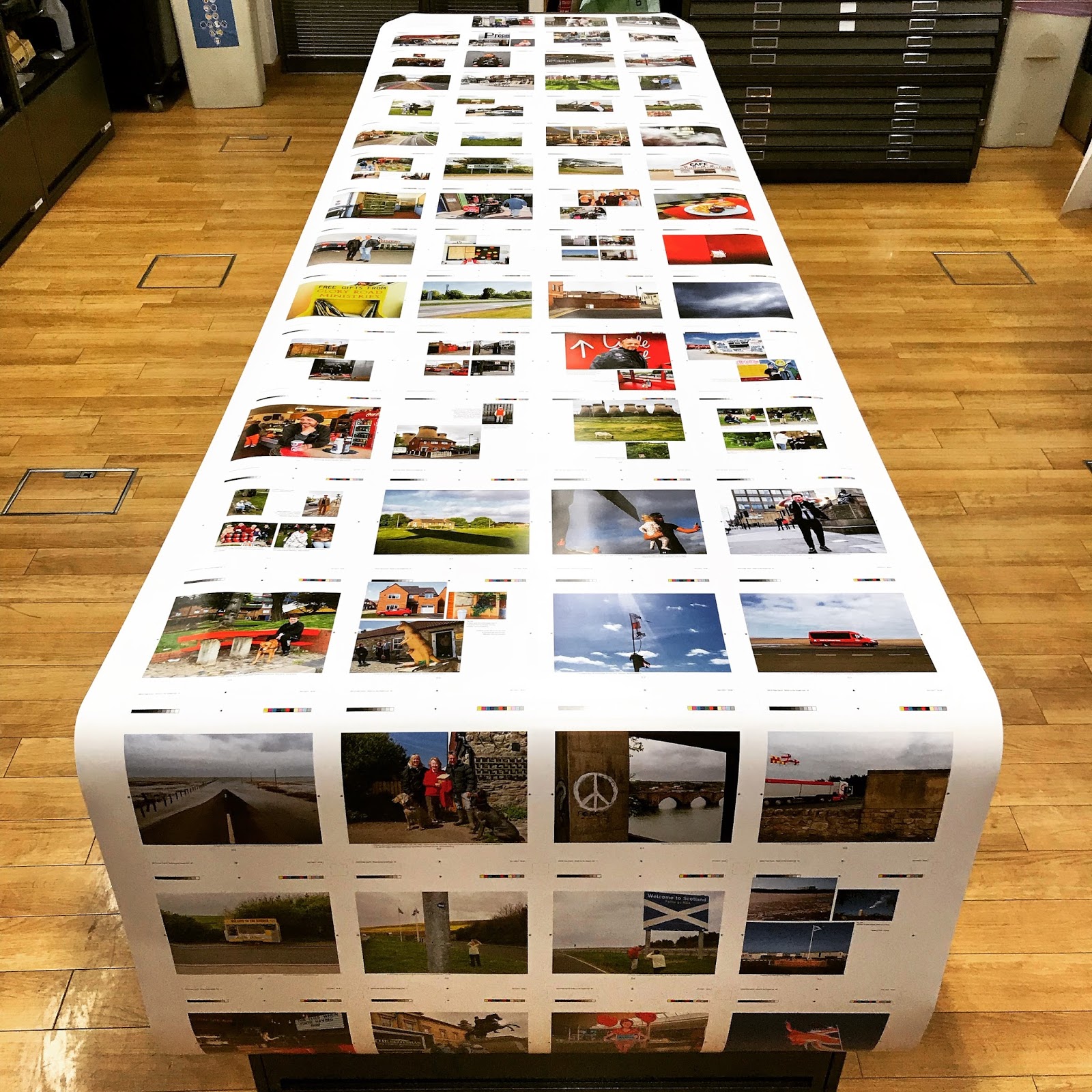
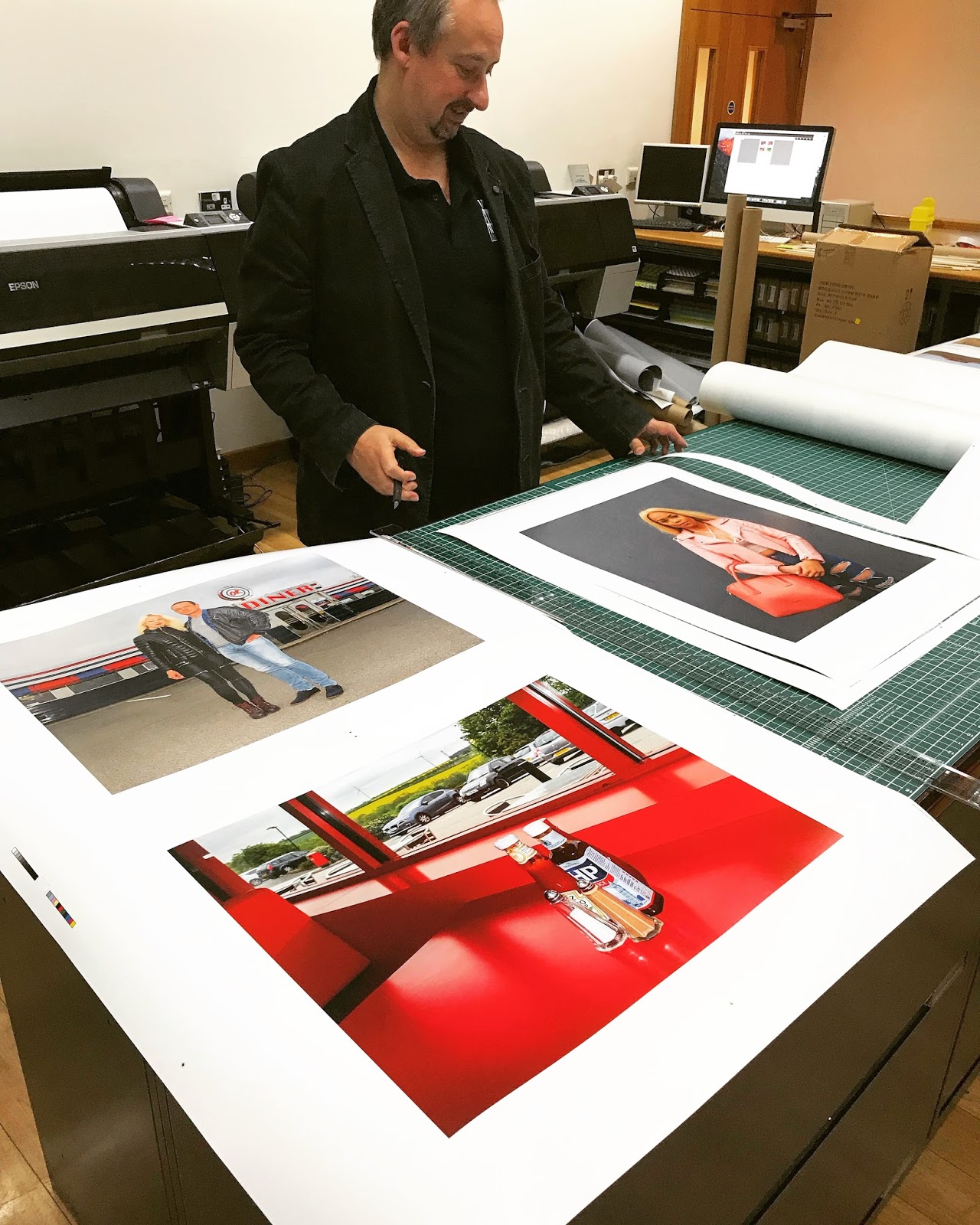
A selection of the reportage will be exhibited at the Art Bermondsey Project Space in London and YOU are invited


The first 500 visitors to the private view and exhibition will be able to collect a complimentary 71 page softback book


Featured on the BBC


Paul Graham's A1

A1: Britain on the Verge prints


Saturday, 28 January 2017

Great Britons of Photography the Exhibition London UK


 DENCH's GREAT BRITONS OF PHOTOGRAPHY
AN EXHIBITION CURATED BY  PETER DENCH
 14 - 25 FEBRUARY 2017

"Being a photographer can be a solitary and selfish pursuit, often necessarily so. You compete, aim to be the best and plot your romp towards the next triumph: for years OLYMPUS Visionary, Peter Dench operated like this.

With the domination of digital photography and no longer socialising at the film processing lab, combined with the newfound comfort in his forties and with his craft, Dench actively began to meet other British photographers, to take an interest in what they have done and the way in which they did it.

DENCH’s Great Britons of Photography, brings together the work of some of the greatest living British photographers including: Jocelyn Bain Hogg, Marcus Bleasdale, Harry Borden, John Bulmer, Chris Floyd, Brian Griffin, Laura Pannack, Tom Stoddart, Homer Sykes, Anastasia Taylor-Lind and Peter Dench (naturally).

All of the photographers featured in this intimate and revealing exhibition have shaped Dench in some way; sometimes professionally, more often, personally. They are glimpses into the lives and practice of some of British photography’s most extraordinary characters."


Art Bermondsey Project Space is a professionally run, not-for-profit independent gallery sponsored by Olympus - as part of their Cultural Initiative Programme -  in association with State Magazine. The gallery provides a platform for fresh ideas in the visual arts and embraces artists from all cultures. Three galleries, three floors, three thousand square feet of this former 19th century paper manufacturer - including a dedicated video-screening suite - have created one of London's most dynamic non-profit art spaces. 


An accompanying book featuring twelve photographers is published by Hungry Eye; delivered as a limited first edition of 500, a high quality, case bound coffee table book with gold foil detail.

“This new collection of interviews and photographs by Dench is hilarious and insightful, always engaging and written with an inimitable wit and style; an instant classic.”  Tom Knox, Thriller Writer

The book will be available for purchase during the exhibition and at the launch on the 15th February to which you're invited. Some of the photographers featured in the book will be present on the night and might even sign their page! If you can't make it along, don't worry, the book is available to buy online here available for shipping worldwide.